


The Unseen Edge: Precision Breathing in Elite Performance
In the relentless pursuit of peak performance, champions understand that the battle is often won in the margins. Elite sports scientists and coaches agree: mastering respiratory efficiency is not a luxury, but a fundamental requirement for sustaining high-output efforts [1].
A simple tool that helps an athlete breathe more calmly, consistently, and efficiently is, by definition, a powerful performance asset.
WorldTour performance coach, James Spragg, who guides top professional riders, notes the psychological advantage:
“Nasal breathing contributes directly to rhythm, control, and a necessary calm under load. If a simple, non-invasive tool helps an athlete maintain that state, its value is unquestionable.”
Echoing this sentiment, WorldTour coach Tim Heemskerk (Visma–Lease a Bike) adds:
“These small breathing aids can deliver a meaningful difference during moments of peak intensity. Riders integrate them because they enhance the feeling of capability—and in performance sport, how you feel is intrinsically linked to how you perform.”
The Science of Airflow and Control
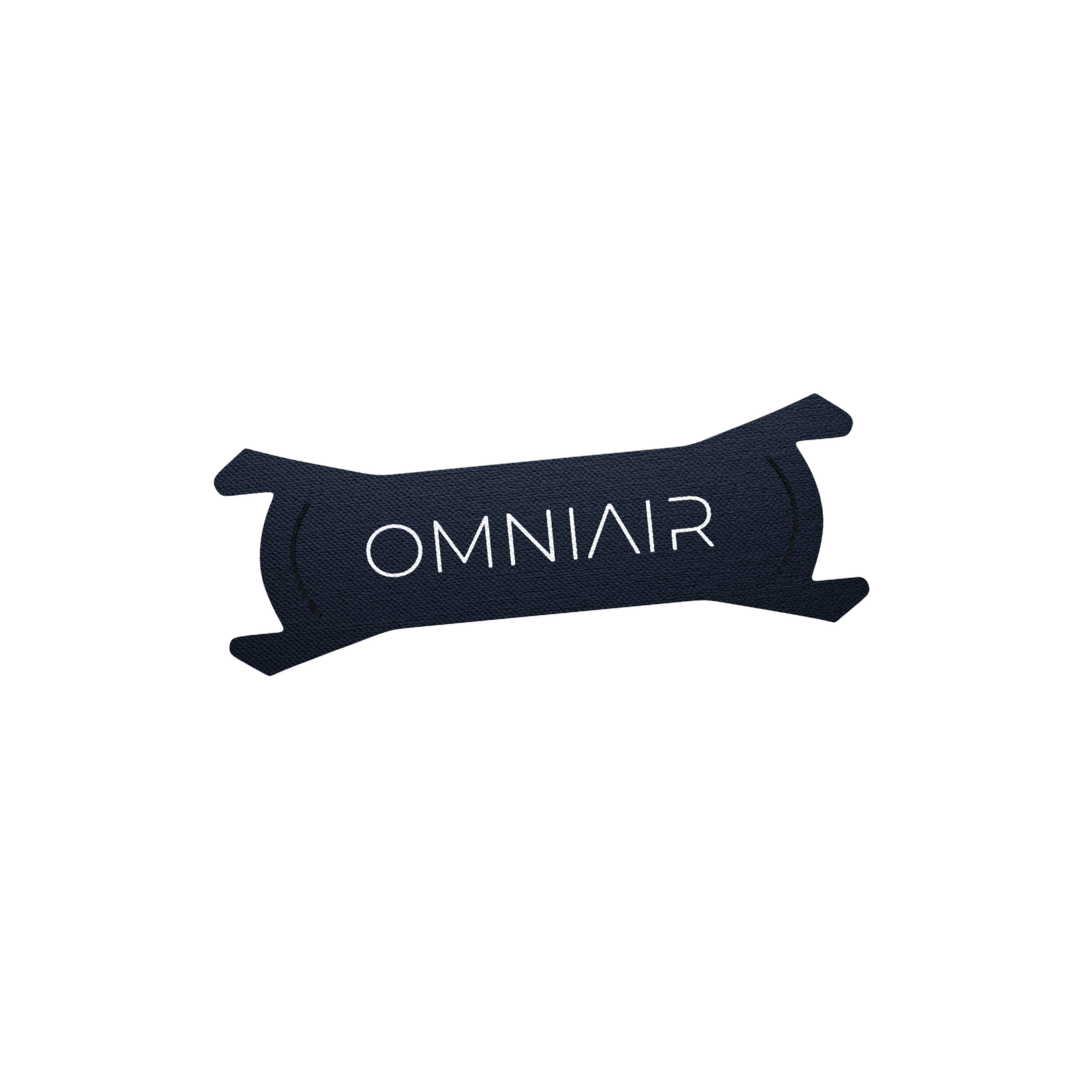
Research into the mechanics of breathing and nasal integrity consistently supports the fundamental function of OMNIAIR: optimizing the physical gateway for oxygen intake.
Mechanical Optimization: External nasal strips mechanically counteract nasal valve collapse, the natural restriction point of the airway 1[2].2 This action can significantly increase measurable nasal airflow by up to 30% [3].
Reduced Resistance: Studies demonstrate a lower Perceived Exertion (RPE) and enhanced comfort when athletes maintain nasal dominance during sustained high-intensity output [4].
Immediate Relief: For athletes managing mild obstructions—whether from anatomical variations or transient congestion (e.g., allergies)—strips provide immediate mechanical relief, ensuring a consistently open, unrestricted passage [2, 5]
The outcome is clear: optimized airflow means reduced resistance and enhanced respiratory comfort, leading to more sustainable intensity.
Why Elite Athletes Demand OMNIAIR
Elite riders choose OMNIAIR not for a quick fix, but as a non-negotiable component of their performance architecture.
Sustained Rhythm: They report a smoother, more highly controlled respiratory pattern. This is crucial for maintaining internal cadence during critical sustained efforts, like long climbs or time trials.
Mental Quietude: An unobstructed, steady airway supports a calmer neurological state. WorldTour athletes describe OMNIAIR as a “micro-tool that creates mental quietude amidst the physical chaos” of high-stress competition.
Effortless Comfort: For those prone to slight internal restrictions, OMNIAIR ensures that breathing remains an effortless, relaxed function, even at maximal heart rates.
Ritual and Confidence: Integrating OMNIAIR into the pre-race routine provides a concrete, repeatable step toward preparedness, translating into increased focus and self-assurance on the start line.
The OMNIAIR Standard
OMNIAIR is not a distraction; it is a precision-engineered component for the athlete who values control. It is a simple, safe, and effective system designed to help you:
✔️ Optimize airflow for peak efficiency.
✔️ Maintain a controlled breathing rhythm under duress.
✔️ Sharpen mental focus during critical moments.
✔️ Maximize the feeling of comfort and control during intense efforts.
In the world of elite performance, every variable must be optimized. A tool that delivers reliable comfort and refined breathing rhythm offers an indispensable advantage when the outcome is measured in seconds.
It's time to claim your unseen edge. Discover OMNIAIR.
📚 References
- Swift, M., & Miles, M. (2009). The role of nasal breathing in optimizing endurance exercise performance. Journal of Sports Science and Medicine, 8(2), 269–275.
- Di Pasquale, M. A., et al. (2012). Effect of an external nasal dilator on nasal resistance. The Laryngoscope, 122(6), 1369–1373.
- Griffin, M., et al. (2000). The effect of an external nasal dilator on nasal airflow. American Journal of Rhinology, 14(4), 237–241.
- Tong, J., et al. (2005). The effect of a nasal dilator on perceived effort during exercise. Medicine and Science in Sports and Exercise, 37(1), 17–20.
- Peltonen, T., et al. (2005). Nasal strips reduce snoring and improve sleep in patients with mild obstructive sleep apnea. Sleep and Breathing, 9(3), 134–138. (Useful for confirming relief in obstructed airways).
